Springs · Birchwood
Garage Door Balance Adjustment in Birchwood
The opener has started to groan on the way up. The door climbs slowly, hesitates near the top, and on the way down it sometimes stops a hand's width above the floor and reverses, as if something were in the way when nothing is.
Garage Door Balance Adjustment
In plain words
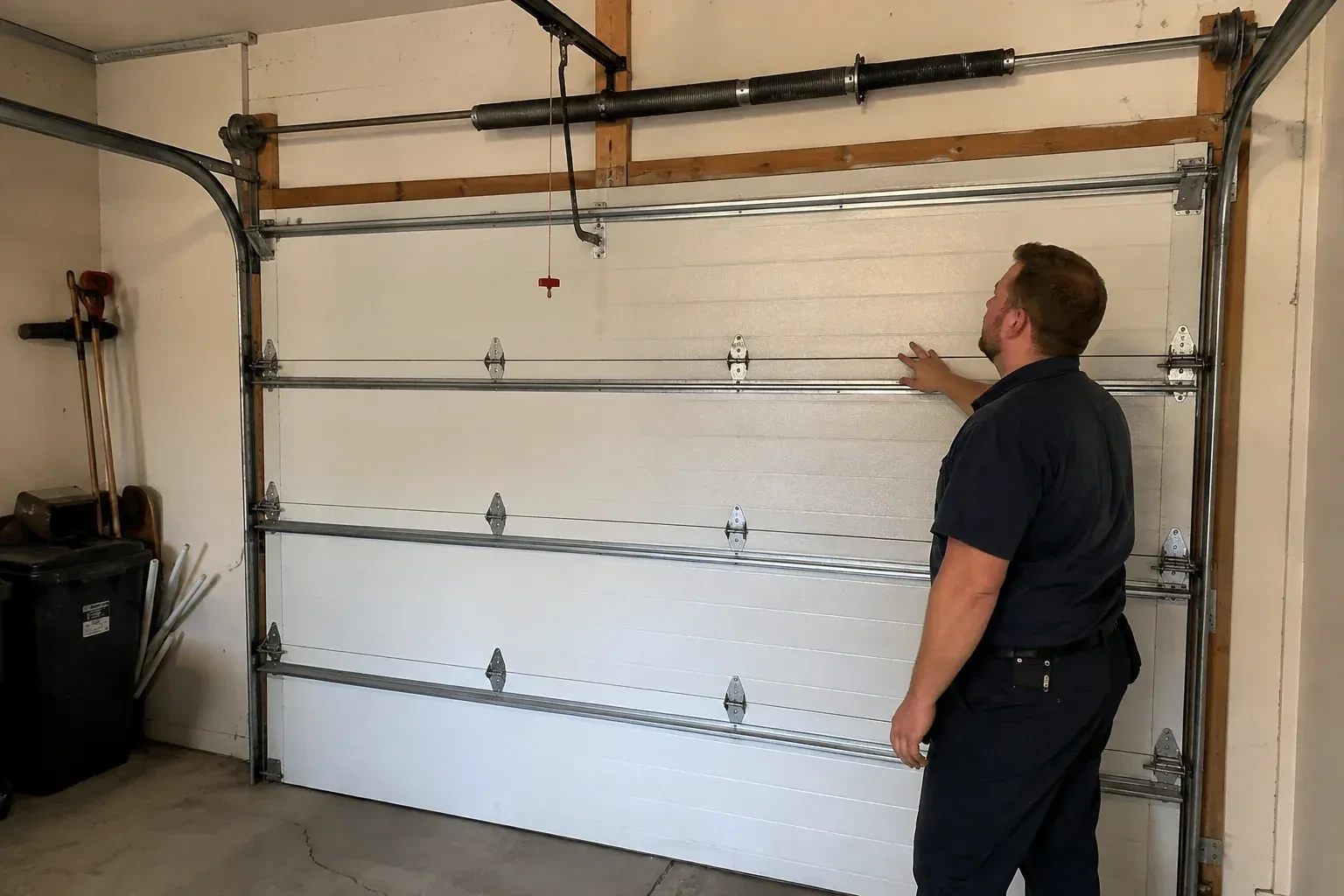
Older detached garages often have extension springs stretched along each horizontal track rather than a shaft above the door. Balancing these works differently: the tension comes from how far each spring is stretched when the door is closed, and it is set by moving the cable attachment along the track hanger or changing the hook position. Both sides are adjusted equally so the door stays level, and the containment cable running through each spring is checked at the same time. The door is opened and clamped so the springs are relaxed during the work, then tested by hand across its travel until it rests where it is left.
How the visit goesYou pulled the red cord to move the door by hand during the power cut, lifted it to about waist height and let go. Instead of staying put, it kept climbing on its own and thumped into the fully open stop.
Birchwood
How the visit goes
Looking at the opener's settings without touching them yet
The opener is inspected as a witness rather than a cure. The technician checks its force and travel settings, listens for strain during a powered cycle, and notes whether it reverses near the floor or stalls part way up. A force setting that has been turned up over the years is a strong hint that someone has been compensating for a door that grew heavy. Those settings are left alone for now, because the right order is to balance the door first and then fit the opener to it. Any change made to the opener before the door is corrected would only mask what the door is asking for.
Adding or releasing quarter turns on a torsion spring
With one winding bar seated firmly in the winding cone and a second ready, the technician loosens the cone's set screws and either adds tension by levering the bar upward or releases it by letting the bar down, always a quarter turn at a time, always with a bar in the cone. After each quarter turn the set screws are tightened onto the shaft, the clamp is removed and the door is lifted by hand to test. A door that sank now holds a little higher; a door that climbed now settles. On a two-spring door the same change is made to both springs so they share the load equally.
A door that is nearly weightless again
The difference is obvious the first time you lift the door by hand. It rises with light effort, pauses when you stop it, and stays fully open without drifting down. Closing it, the bottom seal meets the slab evenly along its length instead of thudding at one corner. Under power, the opener runs quieter because it is guiding a balanced door rather than hauling one, and it stops reversing near the floor for no reason. The door also moves at the speed of your hand, neither racing ahead nor dragging, which is exactly what the industry checklist describes as correct operation.
Garage Door Balance Adjustment
In the van
- Garage-door lubricant
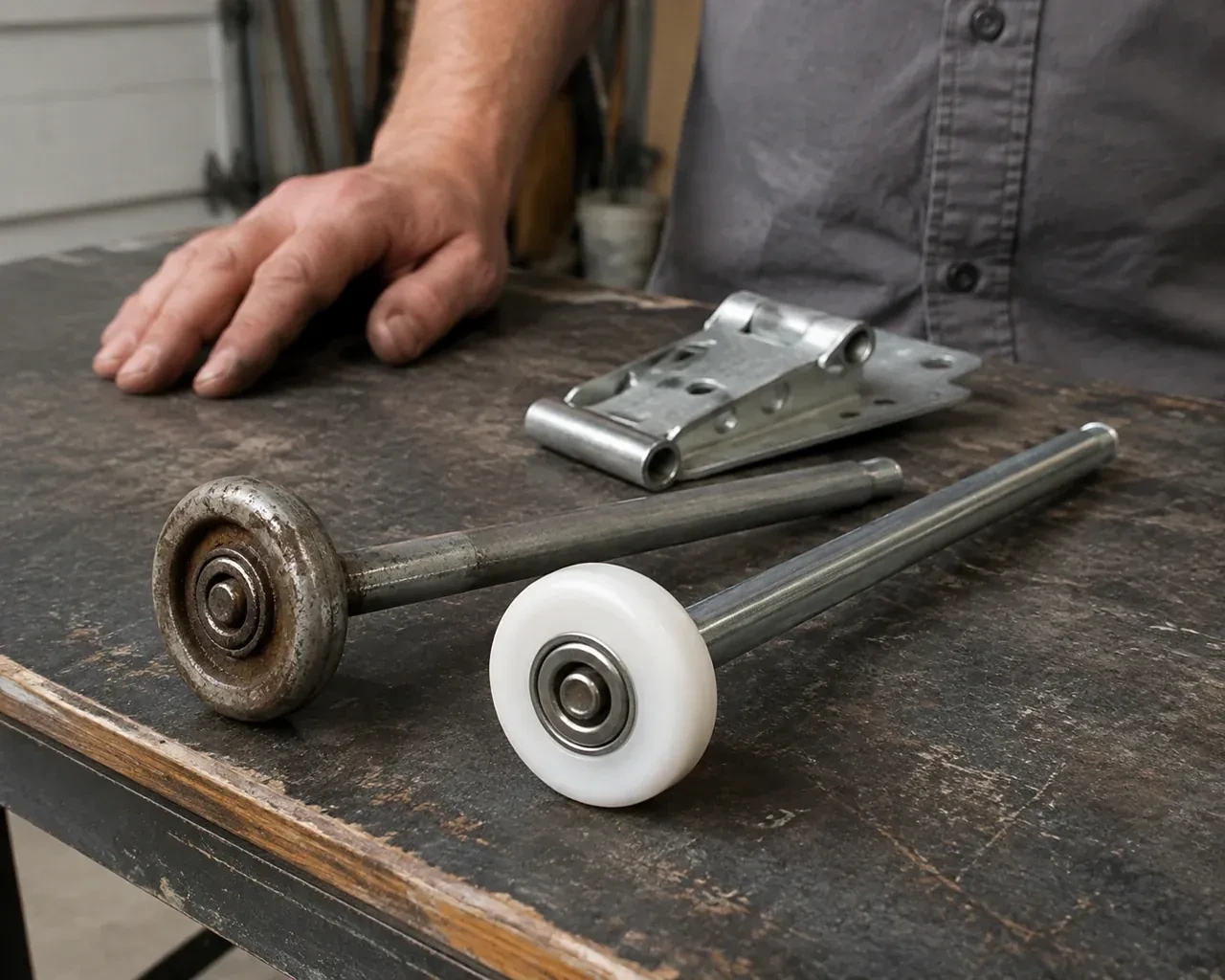
- Replacement hinges
- Winding bars
- Lift cables
- Torsion springs, matched pair
What affects the quote
Same fees day, night or weekend
1Torsion or extension springs
Winding a torsion spring with bars and moving an extension spring's hook are different procedures with different setup, and the type of counterbalance on your door is the first thing that shapes the quote.
2Corroded or seized fasteners
Set screws and cone screws that have rusted solid take time to free, and badly corroded hardware is replaced rather than reused, which shows in the parts list.
3Lubrication and tune-up
Some people combine the balance adjustment with a full lubrication and hardware tightening. That bundle is priced as a whole and saves a separate maintenance visit.
Garage Door Balance Adjustment: questions
How often does a garage door need a balance adjustment?
There is no fixed interval; the door tells you. Many doors go years between adjustments, especially when they are lubricated and the springs were sized correctly. A hand test each season is the reliable guide: if the released door holds at about a metre and stays fully open, it is fine. When it starts to drift or sink, that is the time.
What safety tests are done after the adjustment?
Two are standard. A piece of two-by-four is laid flat on the floor in the door's path and the door closed onto it; it must reverse and return to open. Then, as the door closes, an object is passed through the photo-eye beam near the floor, and again the door must reverse. Both depend on a balanced door, which is why they come after the adjustment rather than before.
Is this something I can do myself?
The hand test, yes, and it is a good habit. The adjustment itself is a job for a trained technician, because the springs, cables, drums and bottom brackets are under high tension whenever the door is closed, and the industry's own guidance reserves any change to them for someone with the right bars, clamps and method. Leaving that part to the visit keeps the whole thing uneventful.
Springs & Hardware
Garage Door Balance Adjustment near you
People in Birchwood call about garage doors for many reasons, and we have a service for each: the door that stopped, the one that got loud, the one that lets in cold air, the remote that died, the panel that got dented, and the door that has simply had its day.