Springs · Mississauga
Extension Spring Replacement
You pulled the red cord to open the door during a power cut and it barely moved. Lifting it took your whole weight, and when you let go it came down hard.
Extension Spring Replacement
In plain words
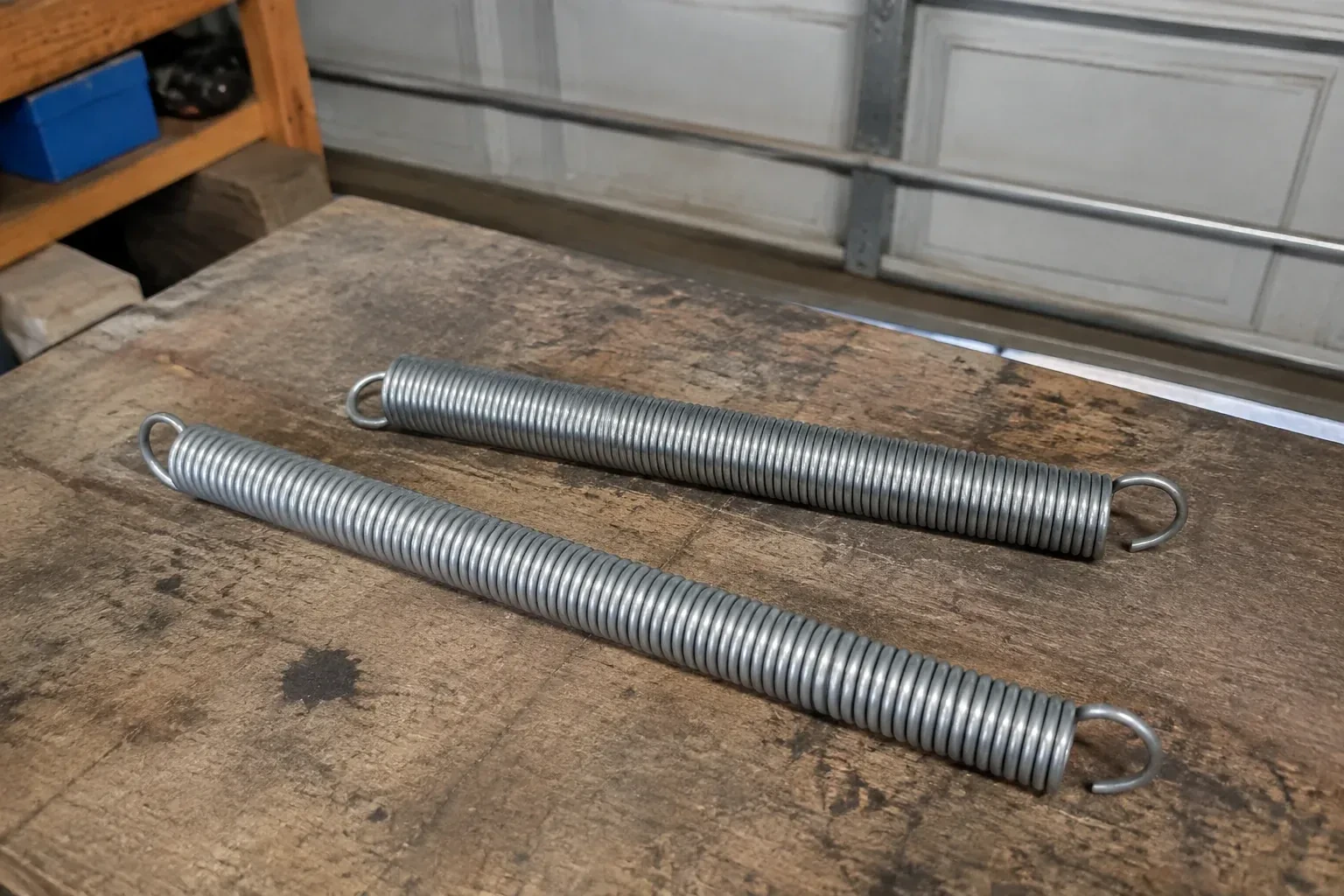
Extension springs are common on the detached garages behind older houses, where a low ceiling left no room for a torsion shaft, and those garages are rarely heated. Damp summers, hard frosts and salt carried in on the car pit the spring wire over the years, and a fatigued spring most often lets go on a cold morning when the steel is stiffest. Replacement fits a new pair rated for the door, renews the pulleys and cables that have rusted alongside them, adds containment cables where the original installation never had any, and leaves a door that lifts easily by hand when the power is out.
How the visit goesA bang like a dropped toolbox came from the garage last night. This morning one of the long springs beside the track hangs in two pieces, and the door will only rise a few inches before the opener gives up and stops.
Mississauga
How the visit goes
Containment cables, present or missing
The question the industry's own inspection checklist asks of every extension-spring door is whether each spring has a cable running through its centre, anchored at both ends. The technician checks for it on both sides, then checks its condition: a cable that is frayed, kinked, anchored to a loose screw or simply tied off to the hanger is not doing its job. Doors installed decades ago often have none at all, and doors that had a spring changed by a previous owner sometimes have one side fitted and one forgotten. Fresh containment cables go on with the new springs, and their anchor points are set into solid framing so that a spring which breaks stays on its cable.
Balancing the door by hand
Balance is judged with the opener still disconnected. The technician lowers the door to the floor, then lifts it: it should rise with modest effort, stay put when let go at about waist height, sit steady when fully open, and come down under control rather than dropping. If it sinks, both springs need a little more stretch and each S-hook is moved one hole to take up cable; if it climbs on its own, one hole the other way. Adjustments are always made in pairs, with the door open and clamped again each time, so the two springs stay equal. Two or three rounds usually settle it.
The numbers that stay with the door
Before leaving, the technician tells you what the door weighed, which spring rating and length went on, whether the pulleys and cables were renewed, and which hook position the cables were set to. Write it on a card by the opener or inside the door's manual. Extension springs are sold by rating and length, so the next set can be ordered from that card without weighing the door again, and a technician arriving later can see at a glance whether the door has been altered since. Add the date and roughly how many times a day the door is used; together those two facts give a fair idea of when the springs will be due again.
Extension Spring Replacement
In the van
- Containment (safety) cables
- Rear spring hangers and angle iron
- Lag screws and hanger bolts
- Replacement rollers and hinges
- Door-weighing scale
What affects the quote
Same fees day, night or weekend
1Converting to torsion instead
Where the garage has the headroom, some owners take the opportunity to move to a torsion system. That is a different job with different hardware and is quoted as its own option.
2Working room around the springs
Shelving, a stored canoe or a car parked under the tracks slows the work along the horizontal run. Clearing the sides of the garage beforehand keeps the time on the quote short.
3Rollers, hinges and bottom brackets found worn
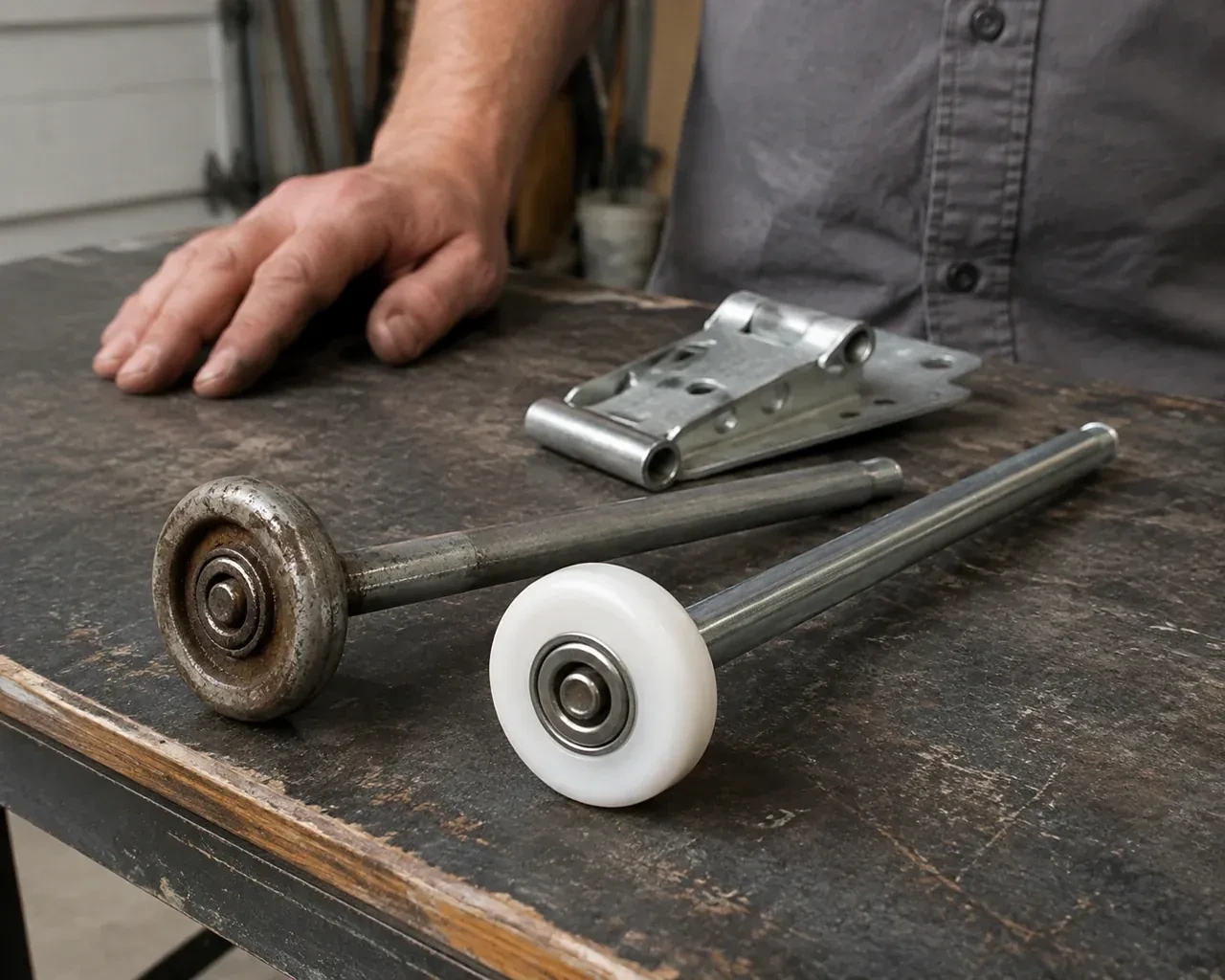
Cracked roller wheels, split hinges or a bottom bracket rusted at the cable pin are pointed out during the inspection and offered as optional items, since the door is already open and secured.
Extension Spring Replacement: questions
What information helps when I call?
Whether the springs run along the tracks or sit above the door; whether one is broken, hanging loose or just looks stretched; whether the door is closed, open or stuck partway and level or crooked; roughly how wide and tall the door is and what it is made of; and whether there is a cable running through each spring. A photo taken from inside with the door closed answers most of that at once.
Can I use the door as soon as the work is done?
Yes. The last steps of the visit are the balance test by hand, several full cycles under power and the opener's reversal checks, so the door is ready for normal use when the technician leaves. New springs need no settling period. It is worth running it yourself once or twice while the technician is still there, so you know what a properly balanced door sounds and feels like from now on.
What can I do to make the new springs last?
Three things. Spray the springs, pulley axles and hinges with a garage-door lubricant twice a year, which slows rust in an unheated garage. Keep the threshold clear of bins and packed snow so the door never stops short with the springs still pulling. And leave the opener's force setting where the technician put it, since a door that starts needing more push is a balance question rather than a dial to turn.
Springs & Hardware
Extension Spring Replacement near you
A door in Mississauga that is lifting unevenly, dropping too far, screeching on the rails or refusing the remote is telling you which part is tired. Our services are grouped around those parts, springs and cables, tracks and rollers, openers and controls, so the fix is easy to identify.