Repairs · Mississauga
Garage Door Safety Inspection
Your toddler has discovered the wall button. You want to know, from someone who checks these things for a living, that the door will stop and reverse if a small person is under it.
Garage Door Safety Inspection
In plain words
After a vehicle or an object has hit the door, an inspection follows the force rather than the dent. A bump on the bottom section can nudge a track out of plumb, shift a roller, bend a bracket, or leave one cable seated differently on its drum, and each changes how the door hangs and how the springs share its weight. The technician traces the load path from the point of impact through the hinges, rollers, tracks, cables and counterbalance to the opener attachment, and reports whether the mark is cosmetic, whether a section or piece of hardware needs work, or whether the door has moved out of balance.
How the visit goesYour toddler has discovered the wall button. You want to know, from someone who checks these things for a living, that the door will stop and reverse if a small person is under it.
Mississauga
How the visit goes
A slow walk along the closed door
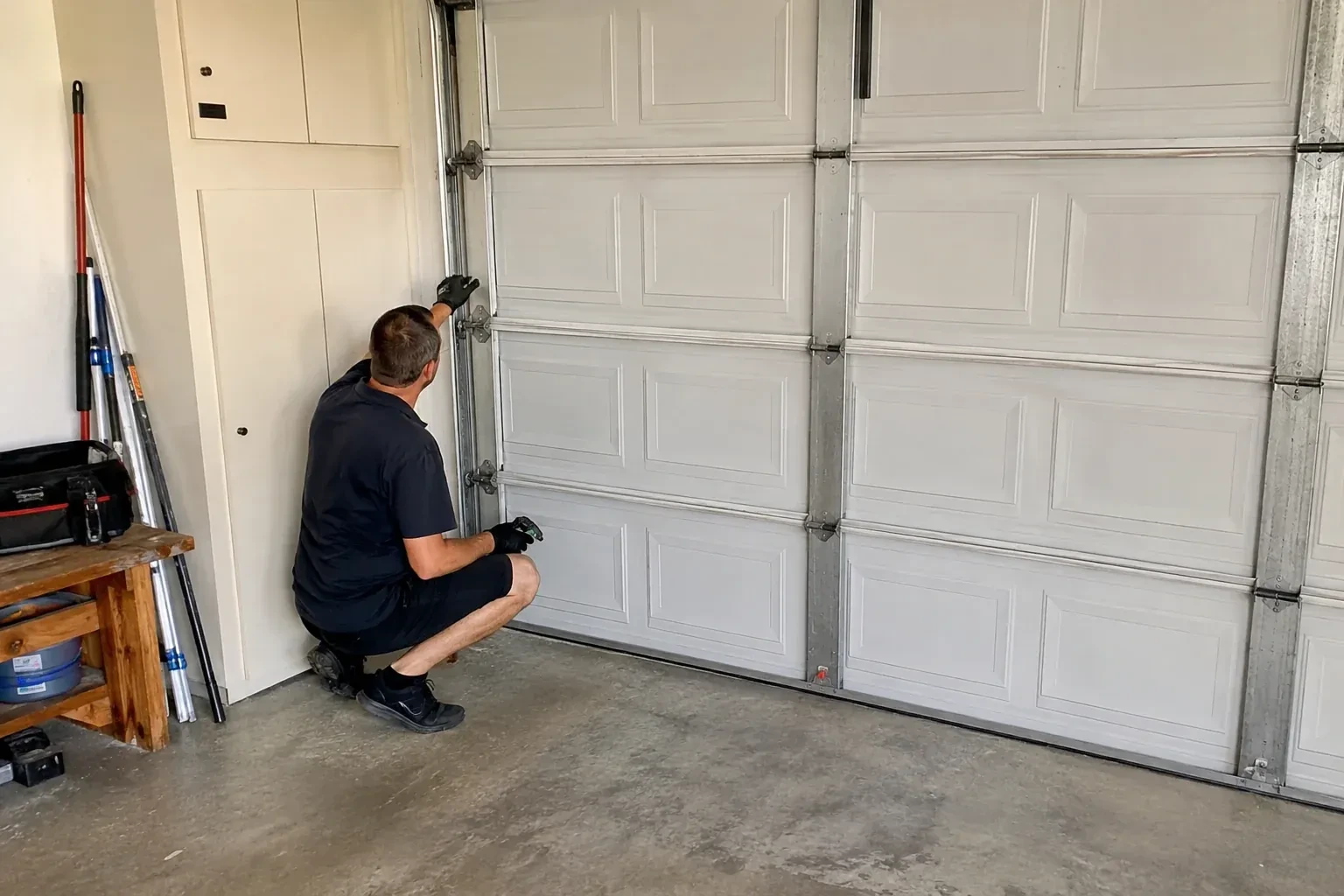
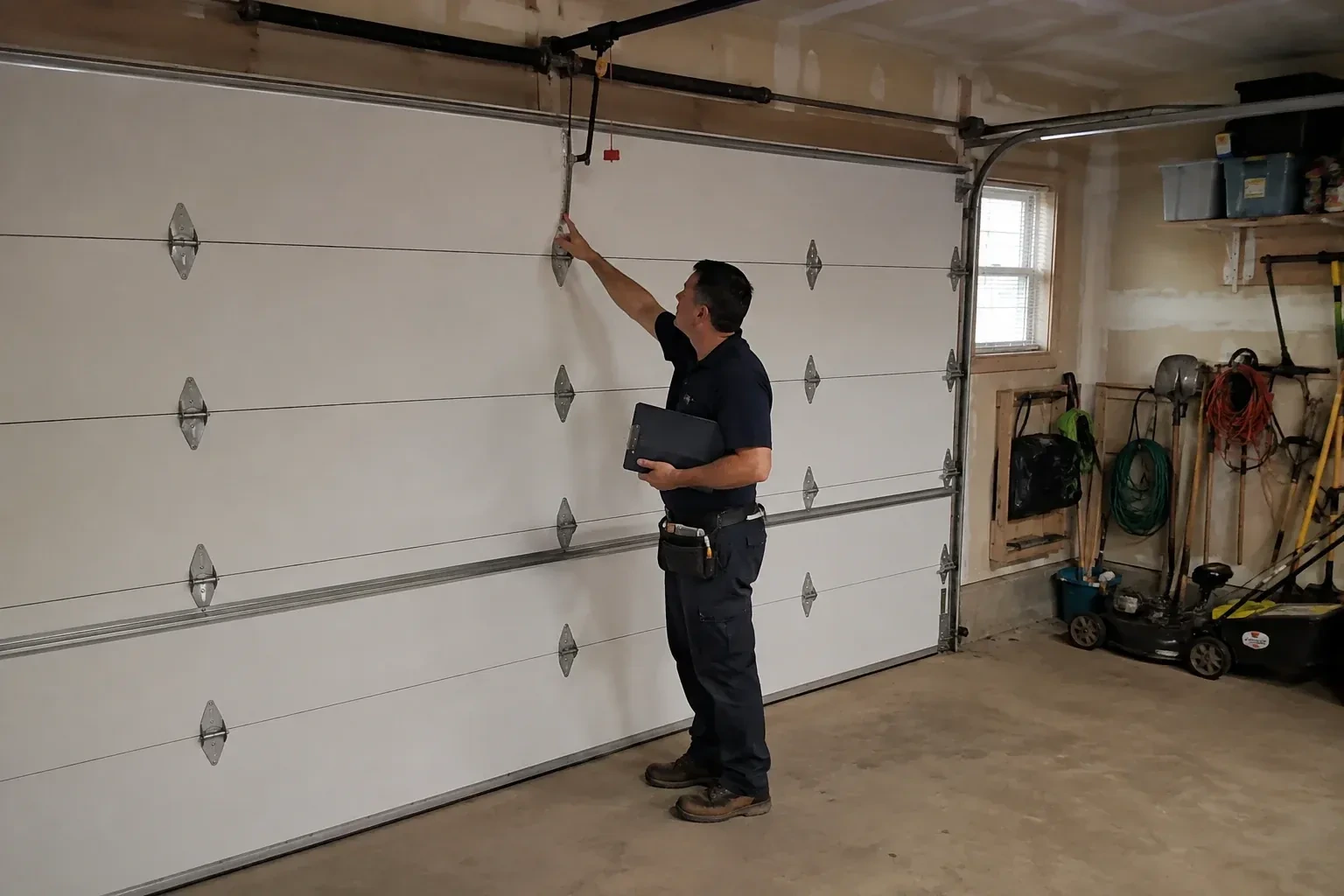
With the door down and the light on, the technician looks at every section from the top down: dents, bowing, cracked stiles, a strut that has come loose. Each hinge is checked for a split leaf or a missing bolt, each roller for a cracked wheel, a bent stem or one that slides instead of turns. The tracks are sighted for plumb and even spacing from the door, and each track bracket and lag into the jamb is checked for tightness. This is unhurried work with a light and a mirror, and it finds the small things, a hinge working loose, a roller stem walking out, that become the big noise next season.
Testing contact reversal with a board
The opener is reconnected and a flat 2x4 offcut is laid on the floor across the centre of the opening. The door is sent down from the wall control. On meeting the board it should stop and reverse to fully open on its own. If it stalls on the board, pushes against it, or only reverses after a long pause, the opener's down-force or travel limit needs attention and the finding goes in the report. Older openers without photo eyes are tested this way too, and their behaviour is recorded against the test the maker specifies. The board is used every time; a hand or foot never stands in for it.
Keeping the opening clear and the controls sensible
A few placement decisions carry on after the visit. Bins, bikes and the snow shovel live away from the opening so the door never comes down on them and the cables never go slack. The wall control stays mounted high enough that a small child cannot reach it and where whoever presses it can see the door. Remotes are kept out of toys and glove compartments that children play in. If the household includes anyone unsteady on their feet, the manual release handle is confirmed to be reachable without a stepladder. None of this is hardware; it is simply the layout that lets the safety devices do their job.
Garage Door Safety Inspection
In the van
- Socket set and nut drivers
- Work light and inspection mirror
- Weatherstrip samples for matching
- Camera for findings
- Tape measure and level
What affects the quote
Same fees day, night or weekend
1Access to overhead track or a locked mechanical room
Some tracks run behind storage or into a locked mechanical room, and reaching every bracket and fixture takes longer when a ladder or a key has to be found first. Clearing a path to the track ahead of the visit lets the inspection move through the whole door without interruption.
2Maintenance done during the visit
Lubrication, photo-eye cleaning and alignment, fastener tightening and fresh batteries can be added on the spot. Each is a small line on the quote, chosen by you at the door.
3How many doors are on the property
Each door and opener gets its own inspection and its own record. Two doors in one visit share the travel, but the checks are done in full on both.
Garage Door Safety Inspection: questions
What is the balance test and why does it matter?
With the opener disconnected, the door is lifted by hand. If it moves with light effort and stays put at waist height, the springs are carrying its weight as designed. If it drifts up, sinks or feels heavy, the springs are out of step with the door and the opener has been doing the lifting. That strain shortens the opener's life and can defeat its reversal settings, which is why balance is checked first.
Is the inspection a repair visit?
It is a look and a record first. Small maintenance items such as lubrication, cleaning and aligning the photo eyes and tightening fasteners can be done on the spot if you wish. Anything involving spring tension, cables, drums, worn rollers or damaged sections is written up with a clear explanation and quoted as its own job, so you decide with the full picture in front of you.
What gets lubricated, and what is left dry?
The moving metal-on-metal points get a light coat: the spring coils, the hinge knuckles, the roller bearings and the pins at the bottom brackets. A silicone or lithium product made for doors is used, then the door cycles a few times to carry it in. The tracks are the exception; they are cleaned and left bare, since a slick track lets the wheels skid and holds grit against them.
Repair & Maintenance
Garage Door Safety Inspection near you
A door in Mississauga that is lifting unevenly, dropping too far, screeching on the rails or refusing the remote is telling you which part is tired. Our services are grouped around those parts, springs and cables, tracks and rollers, openers and controls, so the fix is easy to identify.