Openers · Rattray Park Estates
Belt-Drive Opener Repair in Rattray Park Estates
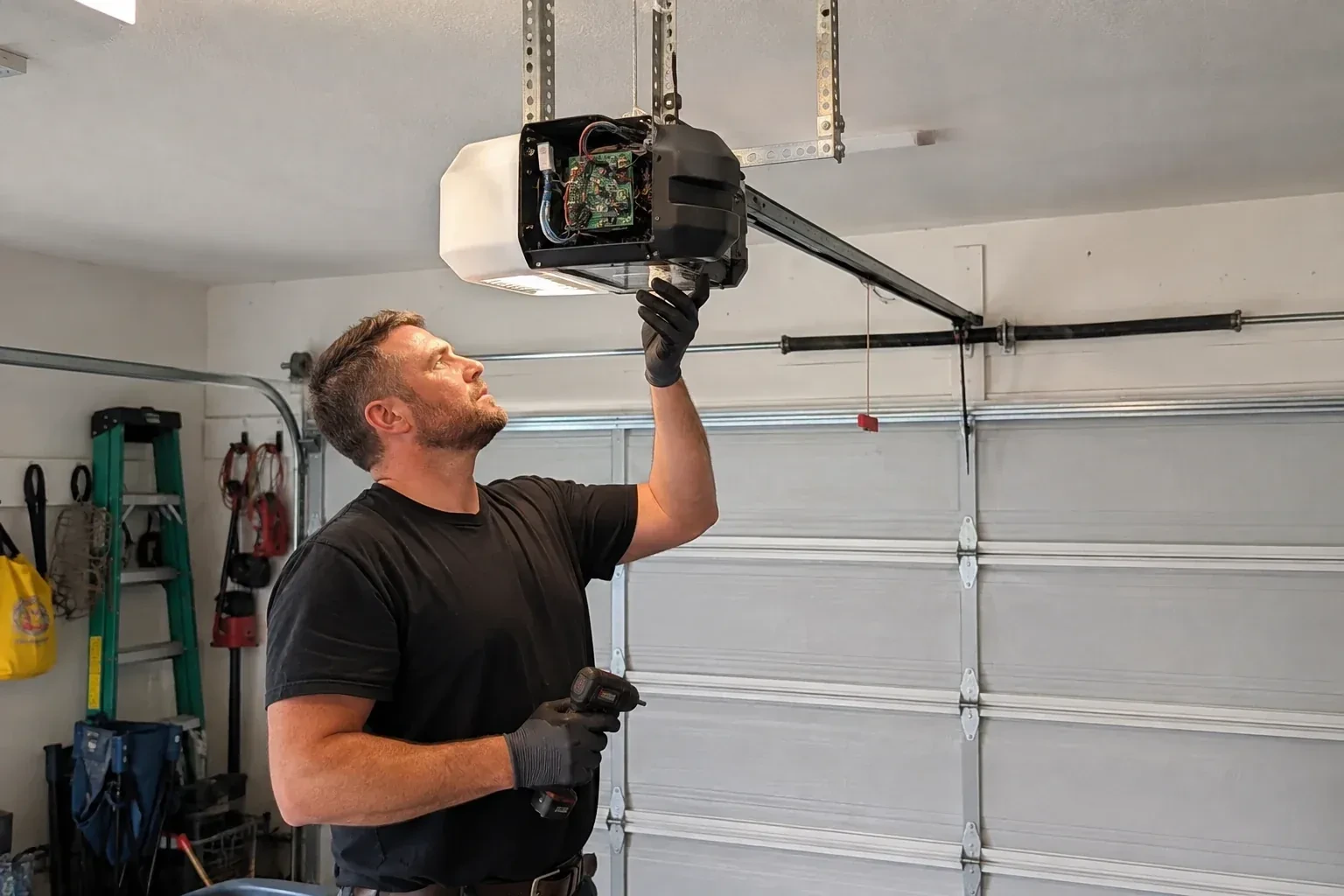
Press the remote and the motor runs its full cycle, lights on, the usual whir, but the door does not move a centimetre. Up at the trolley, the belt is hanging loose where a small plastic clip used to hold it.
Belt-Drive Opener Repair
In plain words
Winter is a good season to have a belt drive looked at. Rubber stiffens in a cold detached garage, so a belt tensioned on a warm day can run tight and noisy in January, and a bottom seal frozen to the slab makes the operator reverse before the door has moved. Belt-drive opener repair in cold weather sets tension to the maker's specified measurement, frees a trolley release that has stiffened, frees a door frozen to the floor before the opener moves it, and puts a cold-rated lubricant on the door hardware. The belt stays dry; the hinges, rollers and springs get the care.
How the visit goesIt is minus twenty in the detached garage and the door climbs in jerks, the belt stiff as a board. By the afternoon, when the sun has been on the door, it runs almost normally again.
Rattray Park Estates
How the visit goes
How tight is tight enough
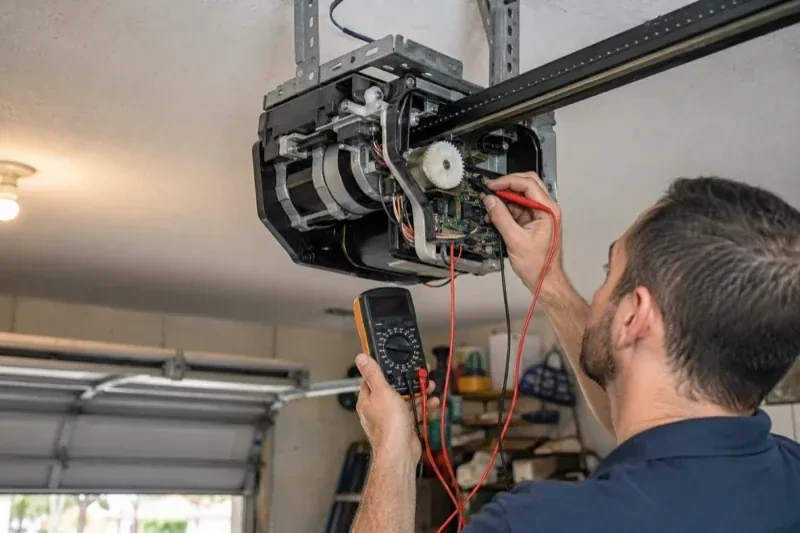
Belt tension is measured, not guessed. At the inner trolley a threaded shaft carries a coil spring and a square nut; turning the nut draws the belt tighter and compresses the spring, and the maker states the spring length that means the belt is right, roughly the width of a thumb. The technician checks that length, presses the belt at mid-span for a little give, and watches it run. A belt hanging below the rail is loose and will skip teeth. A belt pulled drum-tight makes sprocket noise, loads the motor bearings and wears the idler pulley. Both are corrected on the spot, and an adjuster wound to its end tells the technician the belt has stretched past saving.
Fitting a new belt
A replacement belt is matched to the rail length and to the tooth pitch of the sprocket, so a belt for a 7 ft door rail differs from one for an 8 ft rail. The old belt is unclipped from the trolley, lifted off the drive sprocket and drawn back around the idler pulley. The new belt is threaded the same way in reverse, teeth toward the sprocket, its ends joined to the trolley shaft with a fresh clip or master link. The technician confirms the belt sits centred on the pulley and in the rail, then tensions the spring to specification. Because the sprocket was bare, the motor and trolley are phased before the door is reconnected.
A door that is balanced under a belt that is right
Because the door was tested by hand before the belt was touched, you leave with the springs and the drive in agreement. Once a season, with the door closed, unplug the operator, pull the release and lift the door to about a metre: it should stay there. If it drifts down or creeps up, the springs have moved and the belt will soon be working harder than it should, so book a spring adjustment before the belt shows it. A door that hesitates at one point in its travel with the operator disconnected is telling you about a roller or a hinge rather than the belt, and that too is a small visit.
Belt-Drive Opener Repair
In the van
- Inner and outer trolley
- 2x4 offcut for the reversal test
- Belt tension spring and square nut
- Rail joint brackets and stop bolts
- Garage-door lubricant for hinges and rollers
What affects the quote
Same fees day, night or weekend
1Detached or unheated garage
A cold garage still gets the belt tensioned to the maker's specified measurement, but calls for a cold-rated lubricant on the door hardware, a small item that a winter quote names.
2Sensors and controls needing attention
Photo eyes out of alignment or too high, a wall control below the recommended height or a release handle out of reach are corrected during the visit and listed separately.
3How far the technician drives
A garage on the edge of town and one down a long rural road take different time to reach, and that trip is a line of the quote.
Belt-Drive Opener Repair: questions
Can the belt just be tightened, or does it need replacing?
Tightening is the first thing tried. Tension is set at the inner trolley by a square nut that compresses a spring to the length the maker specifies. If the belt reaches that setting and runs without sprocket noise, it stays. If the adjuster is wound to its end and the belt still sags, or the rubber is cracked, glazed or missing teeth, a new belt is the right repair.
Can I adjust the belt tension myself?
The adjustment nut is reachable and some owners do, but there are two things to get right. The operator must be unplugged and the door released first, and the spring must be set to the maker's length rather than tightened until the sag disappears, since an over-tight belt is noisy and hard on the motor. After any change, the reversal tests should be repeated. Many people prefer to have it done during a service.
Should the belt be lubricated?
No. The belt is meant to run clean and dry; oils and sprays soften the rubber and gather grit in the teeth, which wears the sprocket. Lubricant belongs on the door instead: hinges, rollers and springs get a garage-door lubricant once a year. The gear inside the motor head takes a light grease when it is serviced, and that is the technician's job.
Openers & Access
Belt-Drive Opener Repair near you
The garage door services we bring to Rattray Park Estates fall into four groups: repair and maintenance for doors that are sticking or noisy; springs and lifting hardware; openers, remotes and access; and new door installation or upgrade for homes and businesses that are ready for a change.