Repairs · Lorne Park
Garage Door Bottom Seal Replacement in Lorne Park
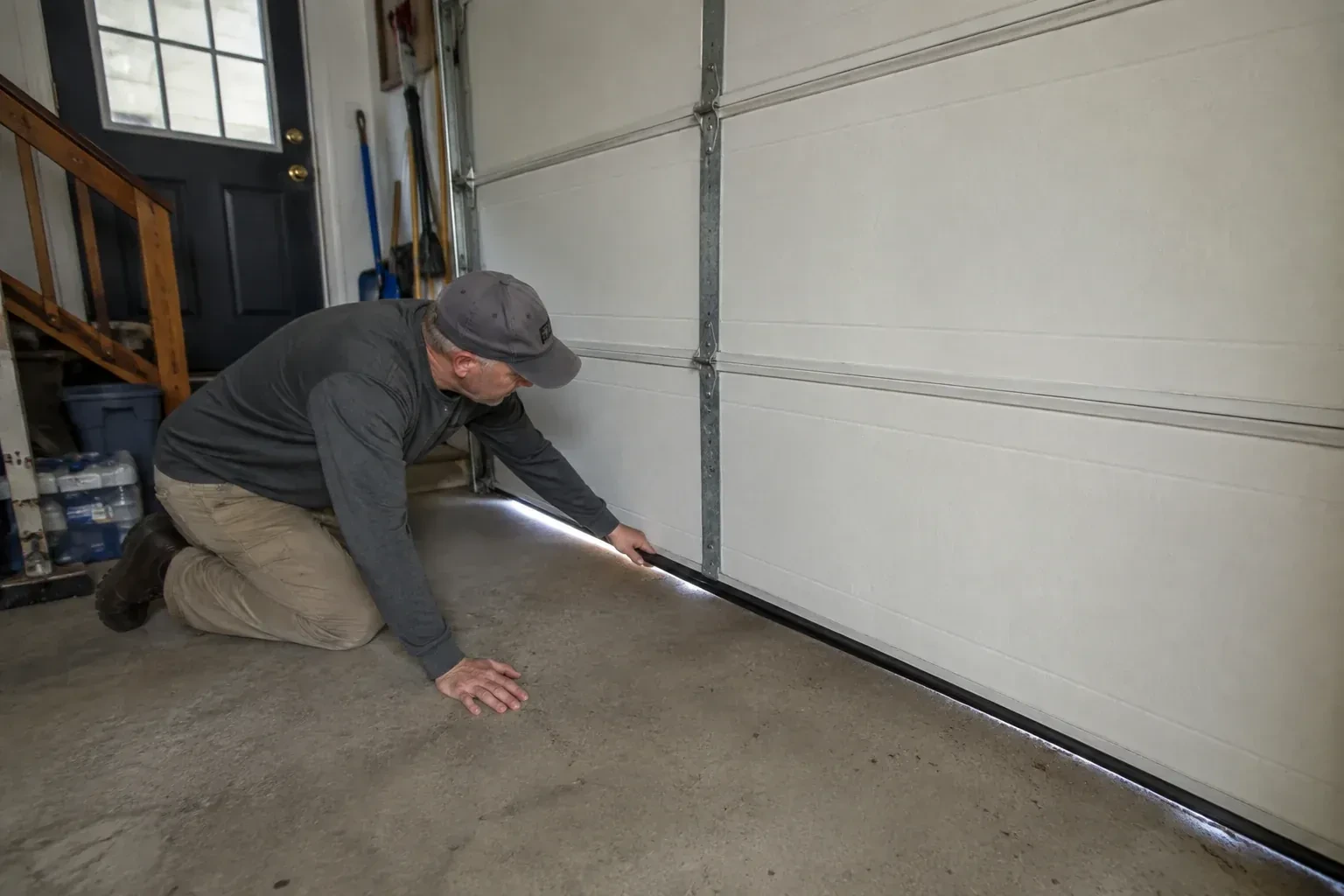
After a spring rain there is a puddle inside the door that reaches the tires. The driveway slopes toward the garage, the slab has a low corner, and the flattened old seal is not making up the difference.
Garage Door Bottom Seal Replacement
In plain words
The material matters as much as the shape when the garage sees real winters. Vinyl is the common choice: it resists moisture and sun well but grows stiff in deep cold and stops moulding itself to the concrete. Rubber stays supple at low temperatures and follows an uneven floor, though it can harden after many years of sun. Silicone keeps its flexibility through hot and cold alike and resists cracking, at a higher cost per metre. Choosing the right compound for a door that faces the weather is part of the service, and it is one reason a replacement seal often outlasts the one it replaces.
How the visit goesAfter a spring rain there is a puddle inside the door that reaches the tires. The driveway slopes toward the garage, the slab has a low corner, and the flattened old seal is not making up the difference.
Lorne Park
How the visit goes
Why the old seal failed
The old strip is read for its history before it comes off. Cracks along the fold and a chalky surface point to sun and age. A flattened bulb that no longer springs back is compression set. A torn edge at one end usually means the seal froze to the floor and the opener pulled it free. Chew marks say rodents. A strip that has slid partly out of its channel points to a bent or opened retainer, or to a seal that was slightly the wrong size. Each of these leads to a different choice of material, profile or retainer work, so the new seal is spared the fate of the old one.
Securing the door before work begins
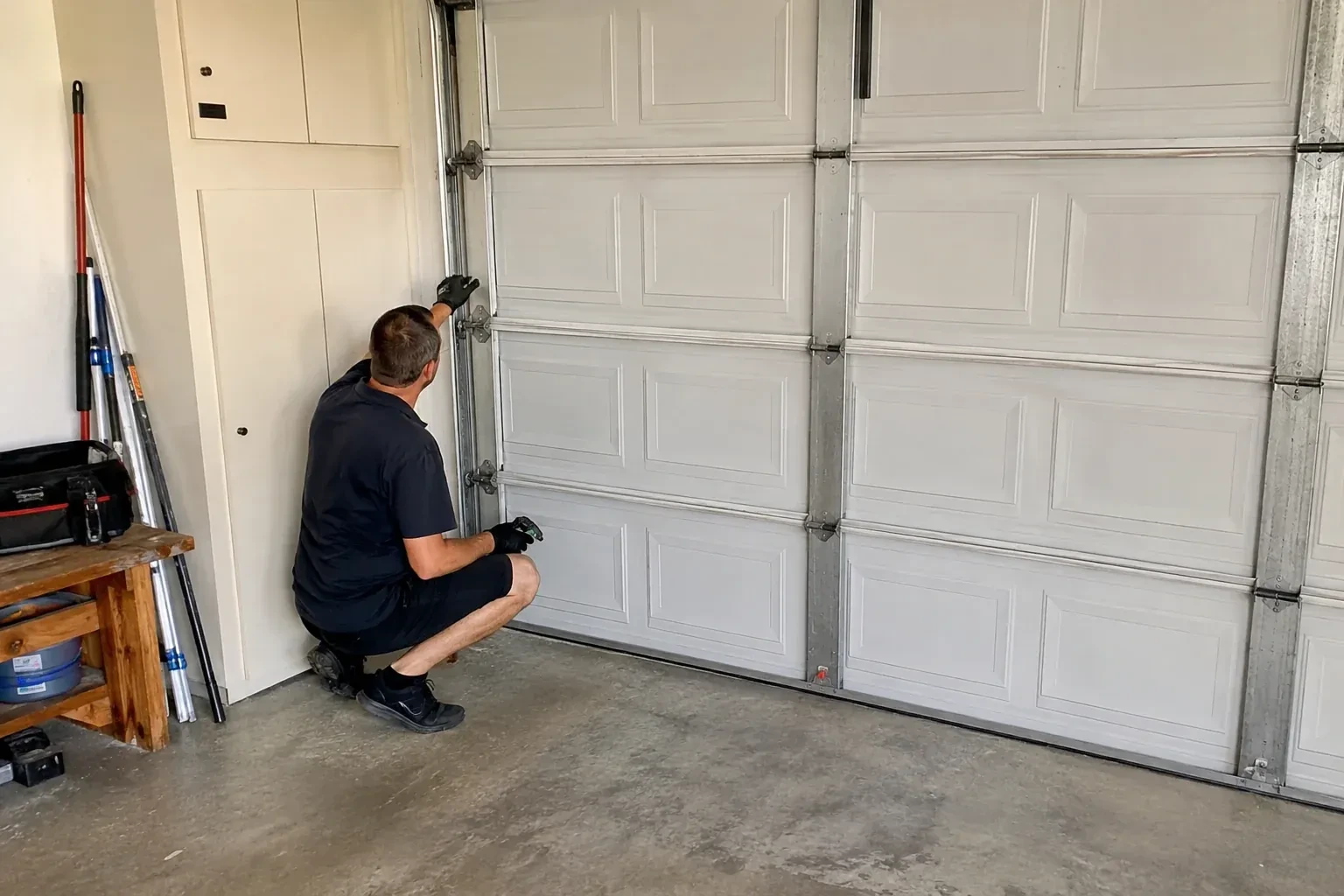
The opener's release cord is pulled so the motor is out of the picture, and the door is raised by hand to a height where the bottom rail sits at a comfortable working level, usually around chest height. A clamp goes on each vertical track just below a roller so the door cannot drift down while the retainer is exposed. The bottom brackets in each corner stay untouched throughout, because they carry cable tension whenever the springs are wound. With the door held and the floor in front clear, the seal and retainer can be handled like any other piece of hardware.
The rest of the weather line
With the bottom sealed, any remaining draft points to the perimeter: the vinyl fin on the stop moulding at the jambs and header, and the joints between sections. These were looked over during the visit and anything torn, shrunk or missing was pointed out. Replacing perimeter stripping is straightforward work that can be planned for a mild day. Together with a sound bottom seal and, where the floor calls for it, a threshold, the garage gains a stronger barrier against wind, water and cold on all four edges, and an attached garage can stay closer to the temperature of the house.
Garage Door Bottom Seal Replacement
In the van
- Seal end caps
- Self-drilling retainer screws
- Wire brush and scraper
- Bead-style bottom seal
- Bulb or U-style bottom seal
What affects the quote
Same fees day, night or weekend
1Wood door nail-on strip
A wood door with a nailed strip takes a different product and more fastening time than a channel seal, and adding a retainer to a wood rail is a further option to consider.
2Condition of the old seal
A supple strip slides out in a minute. One that has hardened and seized in its channel, or been torn and frozen into the corners, has to come out in pieces, which takes longer.
3Season and conditions
A seal frozen to the slab, ice at the threshold or working in deep cold adds time for freeing the old strip, clearing the line and keeping the new roll warm enough to feed.
Garage Door Bottom Seal Replacement: questions
How do I look after the new seal?
Wipe it clean of salt and grit a few times a year, and give it a light coat of silicone spray each autumn so meltwater has nothing to bond to. Keep petroleum products and solvents away from it, since they soften vinyl. Clear ice and packed snow from the threshold before running the door in winter. Once a season, look under the closed door for daylight. That is the whole routine.
How long does a bottom seal last?
Several years is typical, with the range set by exposure. A door facing south or west, a threshold that is wet and salted all winter, and a seal that freezes to the floor a few times a season all shorten the life. A shaded door on a dry slab with a wipe of silicone each autumn can go much longer. The condition of the strip, rather than its age, is what to watch.
What is the difference between T-style, bead and bulb seals?
The names describe the edge that grips the retainer and the shape of the part that meets the floor. A T-style seal has T-shaped edges that slide into slotted channels along the bottom rail. A bead seal has round edges for the rounder channels found on many older steel doors. A bulb, or U-style, seal is a larger tube that compresses further and suits rough or dished floors. The retainer on your door decides which one fits.
Repair & Maintenance
Garage Door Bottom Seal Replacement near you
We think of garage door work in Lorne Park as keeping a heavy moving object safe and smooth. That covers spring and cable work, tracks and rollers, opener force and sensor settings, seals against the weather, and complete door replacement when a repair no longer makes sense.